Thoughts On The Iranian War
If the intel is right, it had to be done and the world owes us a debt of gratitude. If not...Trump just committed the biggest blunder of his presidency.

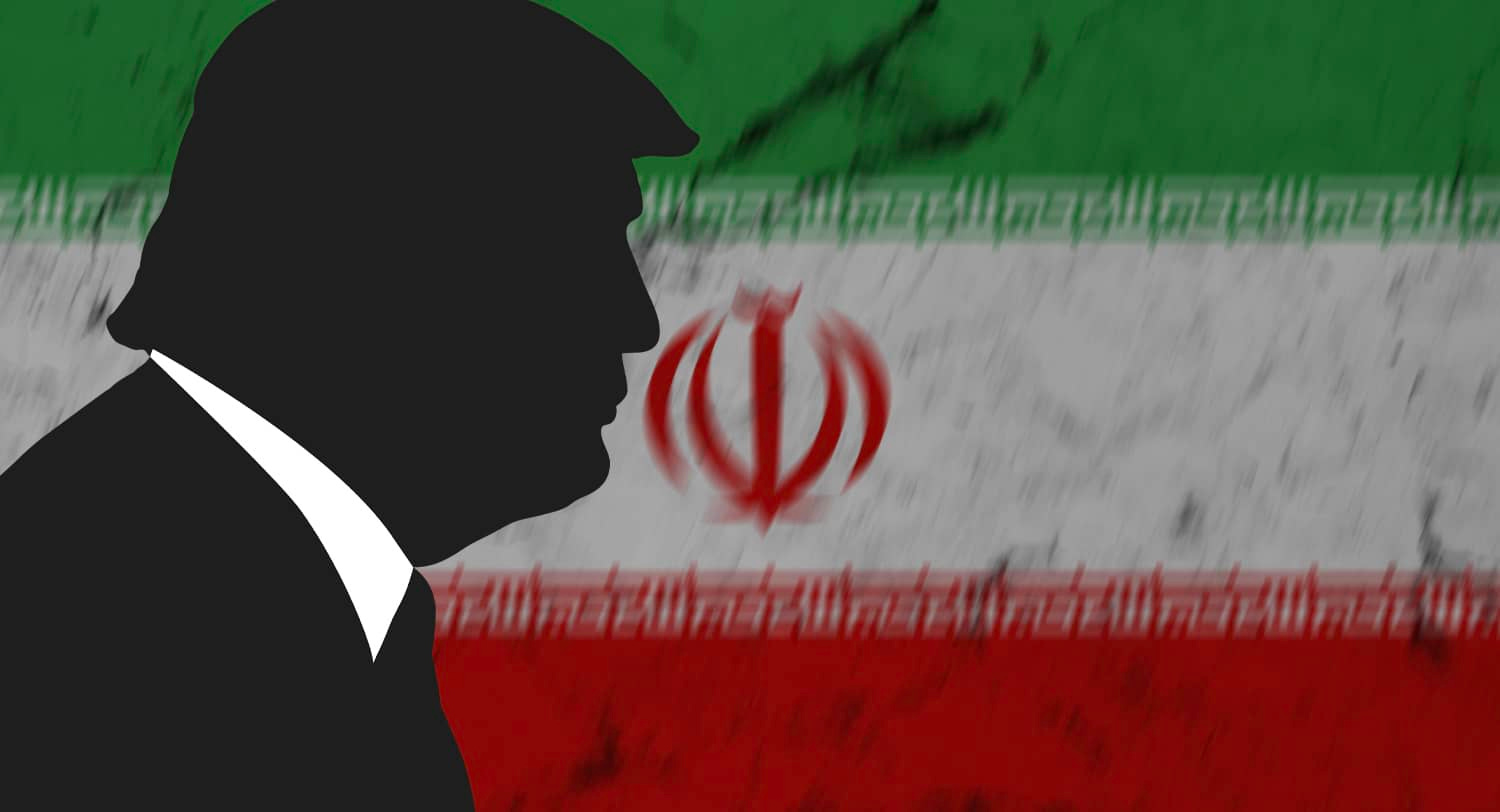
It appears, at least on the surface, that operations against the Iranian power structure and nuclear ambitions are going well. The world’s most active exporter of terrorism and Islamofascism has been decapitated, and its military capacity significantly degraded. But it is still far too early in the cycle to declare anything resembling victory. In fact, whether by coincidence or something more cosmic, my recent immersion in military history for my latest project has revealed a persistent and dangerous theme: the premature declaration of victory is not an exception in war—it is endemic.
.
History is littered with examples of leaders who believed they had already won, only to be proven catastrophically wrong.
.
In July 1941, German Army Chief of Staff Gen. Franz Halder confidently wrote, “It is probably no overstatement to say the Russian campaign has been won in the space of two weeks.” Less than four years later, the Red Army was in Berlin.
.
Before the Battle of Midway in June 1942, Japanese forces were so certain of success that some units had their mail forwarded to the soon-to-be-occupied Midway Atoll. Instead, they lost four fleet carriers—and, with them, the strategic initiative in the Pacific.
.
In October 1950 during the Korean War, Gen. Douglas MacArthur optimistically dubbed his advance toward the Yalu River the “Home-By-Christmas Offensive.” Mao responded by unleashing hundreds of thousands of Chinese troops across the border, sending UN forces into the longest retreat in American military history.
.
And, of course, in 2003, President George W. Bush stood beneath a banner reading “Mission Accomplished.” The war in Iraq had barely begun.
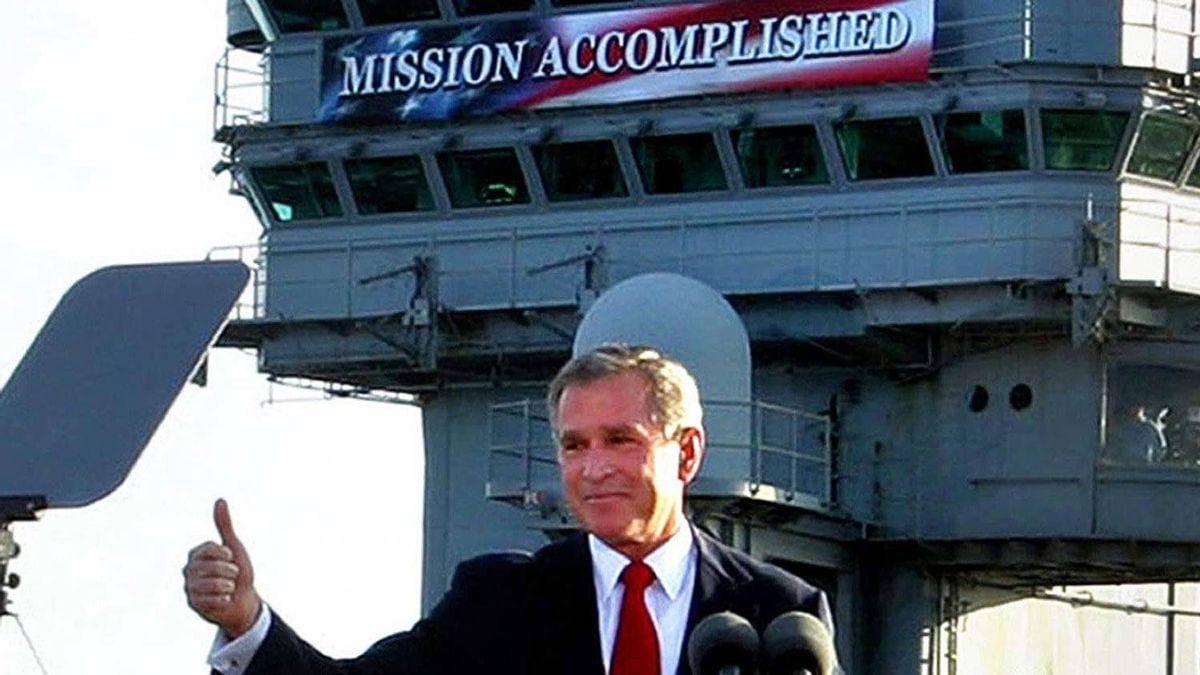
If there is one immutable axiom of warfare, it is this: battle plans rarely survive first contact with the enemy. That reality alone should give us pause before declaring anything resembling victory today.
.
Which brings us to the present moment—and the mission itself.
.
I find it curious, even ironic, that some of the loudest voices warning about the dangers of nuclear war seem to focus almost exclusively on great-power conflict, particularly between the United States and Russia, while giving far less thought to the smaller, more unpredictable actors on the nuclear stage. Since 1949, the world has lived with a nuclear-armed Russia, whether under the Soviet banner or its modern incarnation. And while the Cold War was fraught with peril, it also demonstrated something critical: rational actors, even adversarial ones, tend to understand the logic of mutually assured destruction.
.
There have been documented instances of Soviet officers and American cabinet members halting or delaying the process by which a nuclear strike would be launched because they correctly suspected faulty intelligence. They understood the stakes. They were, in the broadest sense, rational.
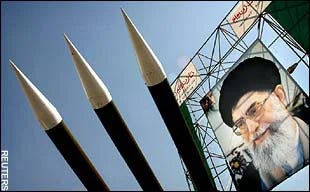
But what of the mullahs?
.
Can anyone say with confidence how a regime steeped in religious absolutism would behave if it possessed a deliverable nuclear weapon? Would they exercise the same restraint as Western powers, including Russia? That is not a rhetorical question; it is the central uncertainty.
.
What I fear just as much as a nuclear exchange with Moscow is something far more chaotic, and likely if we let our guard down: waking up to footage of a radioactive cloud hovering over what was once Tel Aviv. And then what? At that point, we are no longer dealing with theory or doctrine—we are in the realm of cascading escalation. Israeli retaliation would be certain. The only question would be scale. Regional war would be almost guaranteed. The risk of further nuclear use would become very real.
.
And beyond that? No one can confidently game it out.
.
When people speak casually of “nuclear war,” they often imagine Hiroshima and Nagasaki. But those events, horrific as they were, are almost misleading benchmarks. The March 10, 1945 firebombing of Tokyo killed comparable numbers and devastated the city just as thoroughly. In a grim sense, early atomic weapons were simply a more efficient form of conventional destruction, with limited radioactive fallout as the only differentiator.
.
Modern thermonuclear weapons are something else entirely.
.
The destructive power gap between the bombs dropped on Japan and today’s warheads is almost beyond comprehension. Comparing them is like comparing a truck bomb to the original atomic weapons. We are dealing with orders of magnitude that strain the limits of human understanding. The true consequences of even a limited thermonuclear exchange—let alone thousands of detonations—are not just catastrophic; they may be existential.
.
As Annie Jacobson makes chillingly clear in Nuclear War: A Scenario, the chaos unleashed by even a single nuclear detonation could spiral rapidly beyond control. The fog of war, compressed into minutes, becomes a machine for miscalculation.
.
In a perfect world, Iran’s regime would collapse, replaced by a secular, pro-Western government. But the Middle East has never been a place where outcomes reliably follow rational expectations. Religious fanaticism—particularly the Shi’ah revolutionary strain embodied by Iran and its proxies—introduces variables that defy traditional strategic modeling.
.
War planners like to think in decision trees: if X, then Y; if A, then B. But what happens when Y doesn’t follow X? When B refuses to follow A? At that point, the model breaks down. And my fear is that we are once again operating in precisely that kind of environment.
.
Anthony Cave Brown’s A Bodyguard of Lies offers a powerful reminder of how much of war remains hidden, even from those living through it. When classified documents from World War II were released decades later, historians suddenly realized how much had been concealed. Take Coventry. British codebreakers knew the Luftwaffe was coming, yet the city was not evacuated. Why? Was it incompetence ? No. One theory, which I tend to agree with, is that to intercept the raid out of the blue would have revealed that the Allies had broken German ciphers in a program codenamed “Ultra”. Churchill, in what he called “the diabolical mathematics of war,” chose to preserve the secret—one that would ultimately save countless lives—at the cost of thousands in the present. Sometimes the full set of inputs behind a policy decision is simply beyond our view.
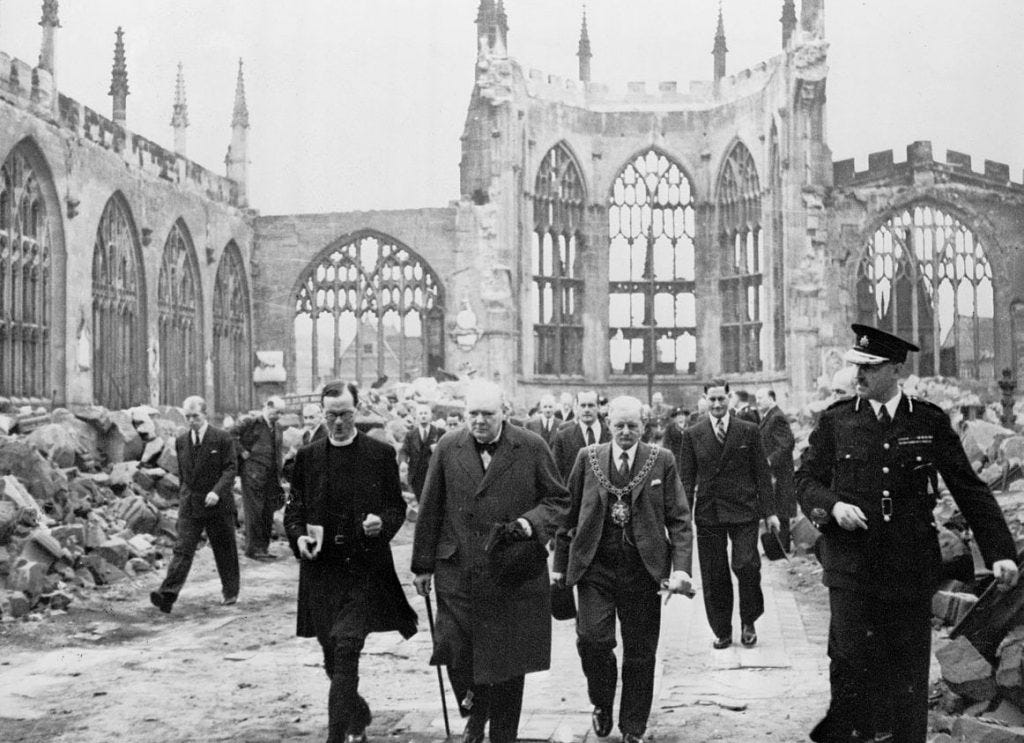
November 1940. British PM Winston Churchill visits the ruins of Coventry after the bombings. Protecting Ultra was more critical to the war effort than one city.
.
One of the most important disciplines in trading is knowing what you don’t know. If that sounds trite, think about it. No one in the media, no one in the blogosphere, and certainly no one outside the War Room truly has access to all the information. The picture we see is always incomplete.
.
So, for now, I am willing to give decision-makers the benefit of the doubt.
.
But that trust is not unconditional. Since World War II, U.S. intelligence has not merely been wrong at times—it has been catastrophically wrong. We were told China would not intervene in Korea. We were told the Gulf of Tonkin justified escalation in Vietnam. We were told Saddam Hussein would not invade Kuwait—until he did. We were told the Taliban would take a year to retake Kabul—until they did it in days. And, of course, we were told Iraq possessed weapons of mass destruction.
.
That track record makes blind trust a tall order.
.
And yet, in this case, I find myself in an uncomfortable position. I would rather policymakers act, and be wrong, than be right about Tehran’s nuclear ambitions and do nothing in the face of a potentially existential threat. It is, in many ways, a Hobson’s Choice. If we get it wrong, U.S. standing and reputation suffers, the administration is discredited, and many die needlessly. But if we got it right, we literally have saved the world. And that, to me, is worth a temporary extra dollar per gallon at the pump. I have children after all.
.
Those on the outside who claim certainty—hoodied former comedians, bedazzled-expressioned pundits obsessing over Israel, while deluding themselves in a cloud of knee-jerk isolationism, the usual suspects in the mainstream news media, or the cackling hens on The View—are overstating what they know. They lack access to the intelligence streams that shape real decisions. None of us have it. So we are left, as we often are, with uncertainty.
.
So I am going to hesitantly, guardedly, trust the administration for now—one far more competent and properly-staffed than the previous—that they would not potentially throw away any chance at retaining power after the midterms with $3.00+ gas and would could be conceived as a broken promise to not start new wars without feeling an urgency of sorts.
.
Let’s hope they are right. Otherwise Trump has paved the way for a Democrat reclamation of power…and that would be a catastrophe for this country.
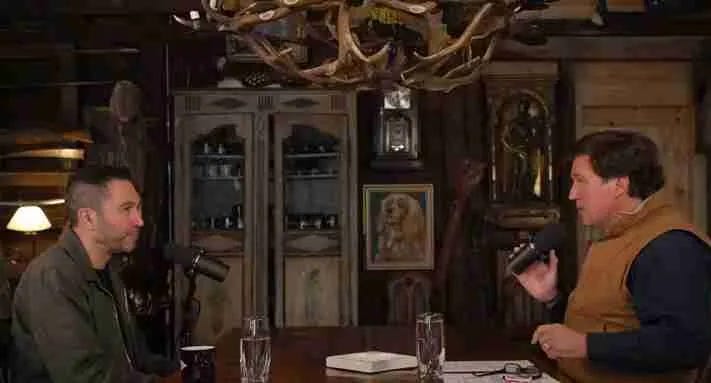
Comedian-turned-pundit and Tucker Carlson: two vocal opponents of the Iranian operation. Are they right? Or are they Tehran’s useful idiots? Time will tell.
Brad is a commodities fund manager, author, and columnist whose articles have appeared on the pages of The Wall Street Journal, NY Post, NY Daily News, Daily Wire, National Review, The Hill, The Federalist, Zerohedge, and other outlets. He is the author of three books. His next book, A War For Half The World: How the Real Struggle for the Future was Fought in the Pacific [Knox/Simon & Schuster], will be released in spring 2027.